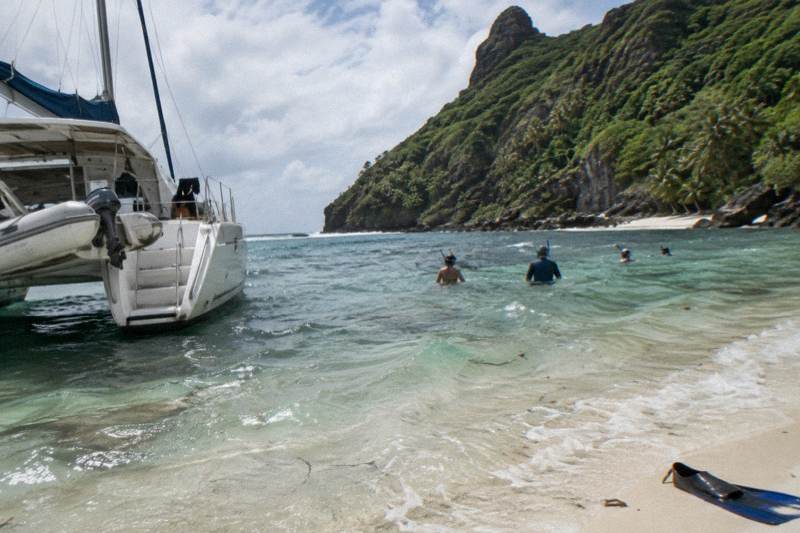
Does Anyone Live On Monuriki Island?
No one lives on Monuriki Island. The uninhabited Mamanuca islet is cared for by the Yanuya village landowners, and cruise visitors land with permission arranged by operators.
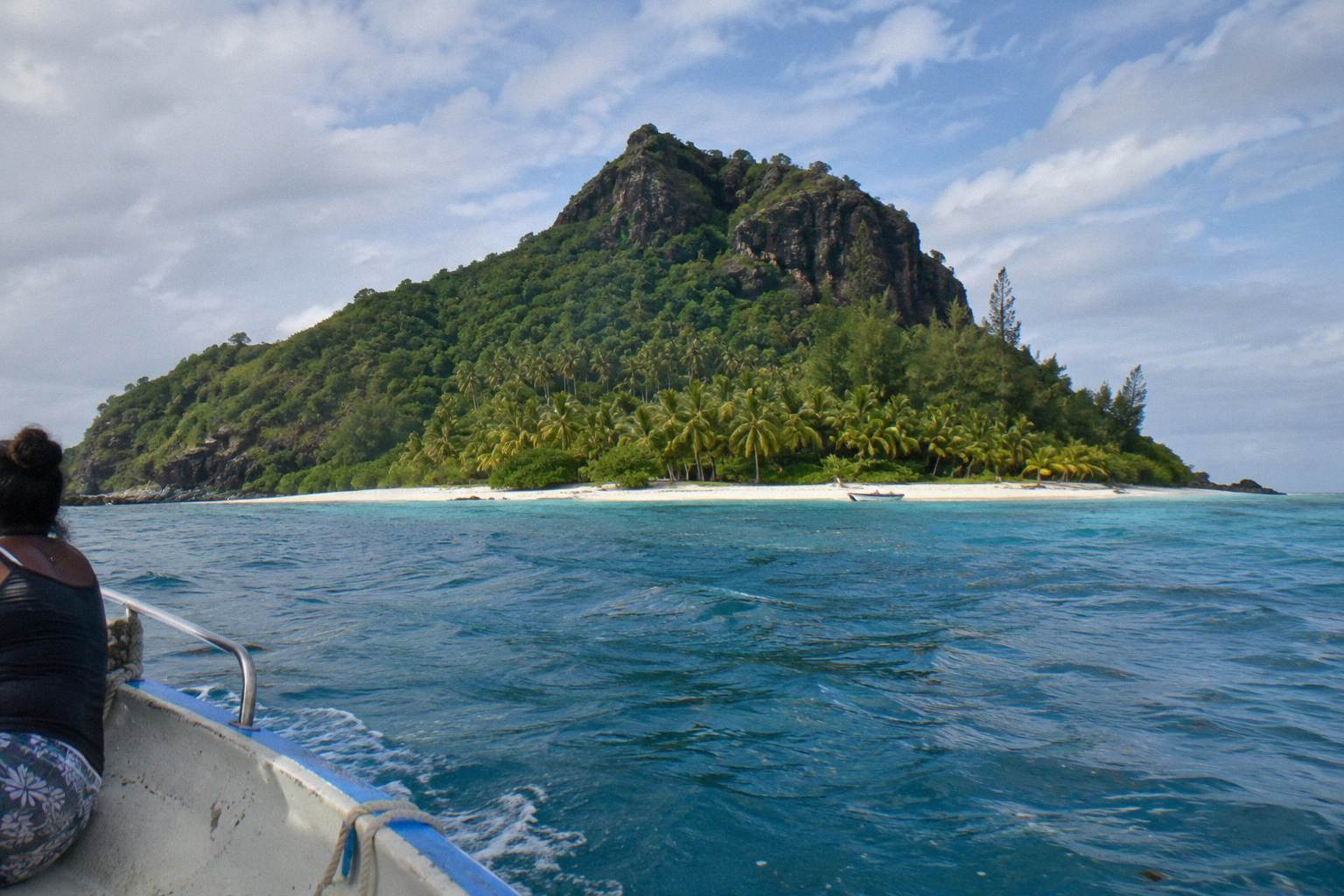
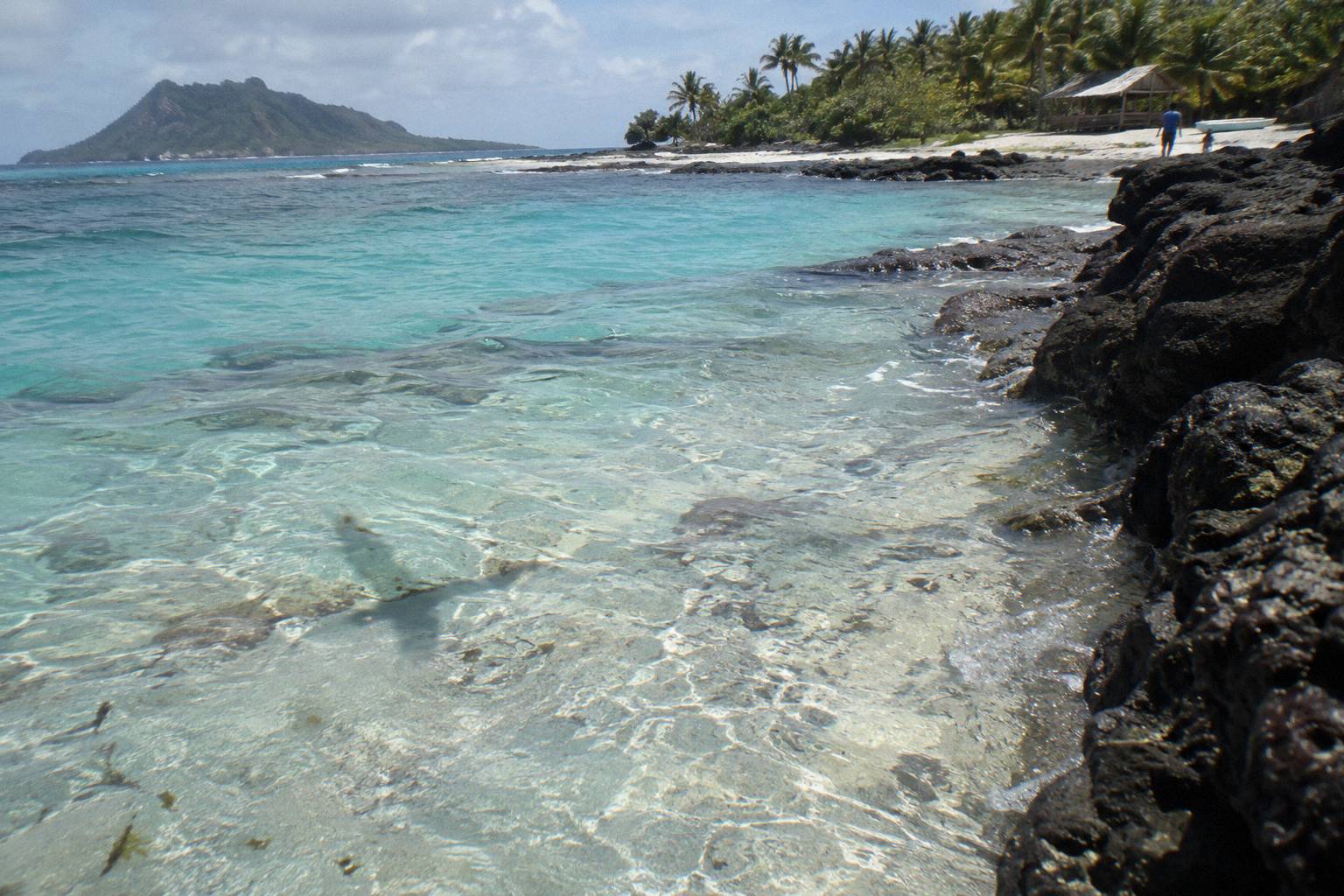
Monuriki Island sits at the southern end of a small group of three islets in the Mamanucas, off the west coast of Viti Levu, and not one person lives there. It is about 1.15 km long, 600 m wide, covers roughly 0.4 square kilometres of volcanic rock, palms and pine forest, and rises to 178 m at its highest point, all ringed by coral reef. The 2000 film Cast Away was filmed on the island, and that single fact is what turned an uninhabited speck into a place travellers actively seek out. You can read the geography and the film history in detail on the island's Wikipedia page.
The interesting part is not the zero. It is everything that happens around a zero: a village that owns and cares for the island, a restoration programme for one of the rarest lizards in the Pacific, seabird colonies that need the quiet, and a day cruise that arranges permission to land its passengers on the wild beach for a cooked lovo lunch. This article works through each of those, and finishes with how a visitor actually gets ashore.
No, nobody lives on Monuriki Island. The island is uninhabited, with a recorded population of zero, and it has no residents, no village and no settlement of any kind. Its custodians are the people of Yanuya village on a neighbouring island in the Mamanucas, who hold traditional ownership and manage Monuriki as a reserve for its wildlife and surrounding waters.
That answer surprises people who have seen photographs of the island's white sand beaches and assumed a hamlet hides behind the palms. There is none. The terrain is volcanic rock, lagoons, small white-sand beaches and tropical dry forest, one of the most endangered vegetation types in the region, and none of it is settled or farmed. Wikipedia records the population plainly as zero, and no operator page claims otherwise.
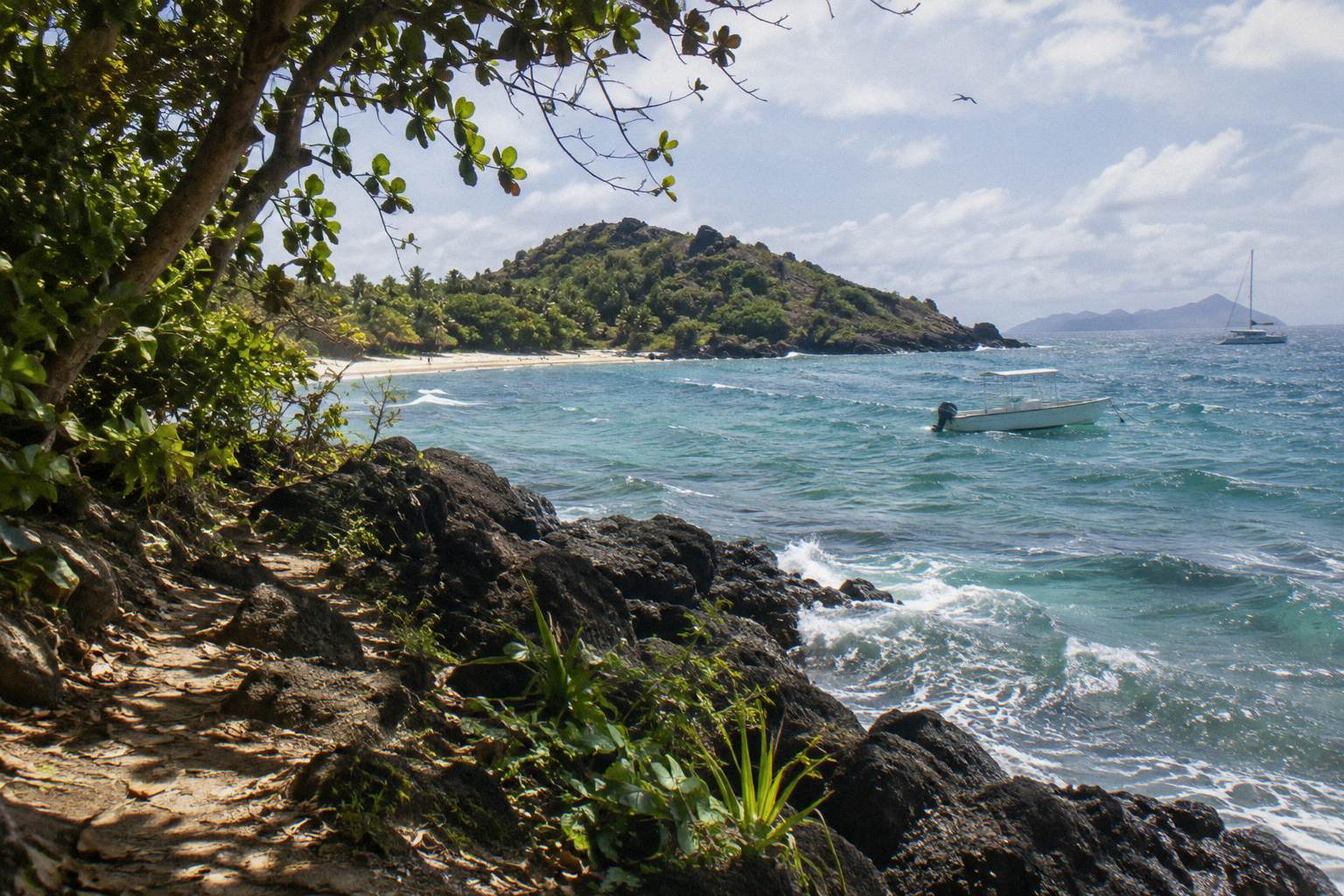
Uninhabited does not mean unclaimed, and this distinction shapes every visit. The people of Yanuya village are the traditional landowners and custodians of Monuriki, and the FIJI Shores and Marinas cruising guide records that private yachts must call at Yanuya first, present sevusevu to the landowners, and respect the chief's decision on whether it is an appropriate time to visit, before anyone sets foot on the island or anchors off its beaches. That protocol applies to private vessels. Day cruise operators arrange access on their passengers' behalf, which is why a booked tour can land while an independent boat generally should not simply nose onto the beach.
The island's status also matters for what you will not find there. There is no shop, no hotel, no ferry terminal and no permanent infrastructure of any kind, because none is needed for an island with no residents. What exists instead is a conservation story, a film location, and a carefully managed day-trip destination reached by boat from Port Denarau, the marina gateway about 20 minutes' drive from Nadi International Airport that the marina's own site describes as the departure point for island exploration.
If knowing that nobody lives there has made you want to stand on the beach yourself, these are the day trips that run from Port Denarau into the Mamanucas:
Of those three, only the Cruisin' Fiji day cruise states a Monuriki stop and landing on its itinerary. The other two are Mamanuca days afloat: a sailing day with lunch and drinks, and an island and reef day sail. None of the three promises identical things, so match the product to what you actually want from the water.
Who Cares For An Island Nobody Lives On?
The Yanuya village landowners care for Monuriki, exercising traditional custodianship over the island and its reef. They have established it as a reserve for its significant wildlife and the surrounding marine environment, and visiting yachts must seek permission at Yanuya before landing. Conservation bodies work on the island with that custodianship in place.
Custodianship here is a working arrangement, not a title on paper. The cruising guide that documents the Yanuya protocol also records the conservation programme the island carries: the National Trust of Fiji and BirdLife Fiji have run goat removal and rat eradication work on Monuriki, with habitat restoration under way since 2011. The point of that work is to give the island's native species a chance on an island where introduced mammals once competed with them. Removing goats and rats from a small island is slow, unglamorous conservation, and it happens precisely because nobody lives there to disturb the results.
“Perfect day, nice crew, beautiful reefs and fun experience. We enjoyed every second and everything was well organized.”
The rules that come with the reserve status are practical. The guide asks visitors to check everything taken ashore for seeds, lizards, rodents and ants, to obey signs and the Yanuya people's instructions, and to restrict movements to the beach where they land. Those are biosecurity measures: an uninhabited island with a fragile dry forest and ground-nesting seabirds can be undone by a single stowaway seed or rat, so the landing discipline exists for the island's sake rather than to restrict anyone's fun.
For cruise passengers this is largely handled before arrival. The operator arranges the landing with the landowners, and the visit occupies the beach and the water rather than the island's interior. If you are ever tempted to charter privately or kayak over independently, the honest answer is that the correct path runs through Yanuya village and its sevusevu protocol, and the FIJI Shores and Marinas guide to Monuriki sets out what that involves for private boats.
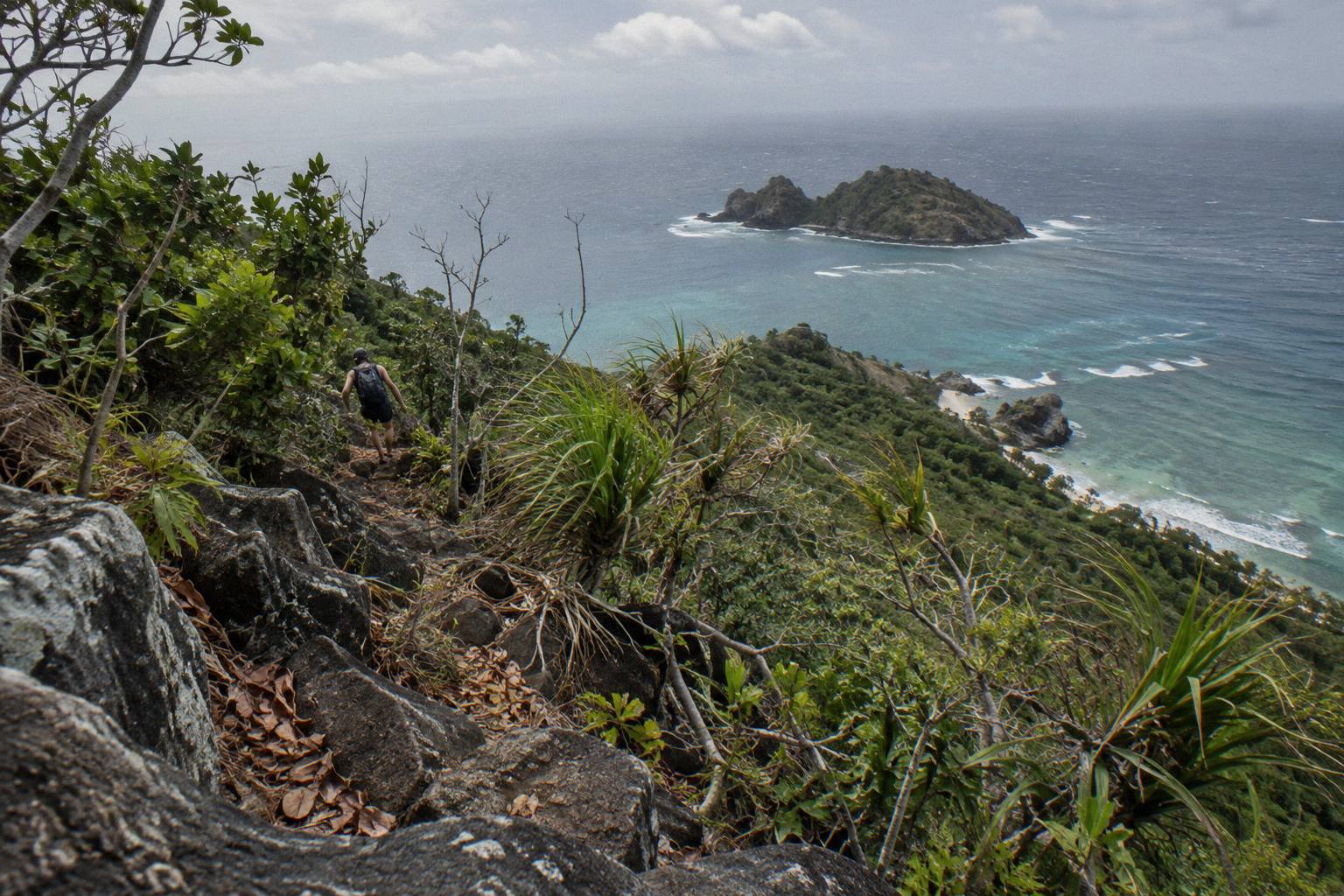
It is worth being precise about the island's designation, because loose language travels fast online. Monuriki is a landowner-established reserve. It is not a national park, not a gazetted marine park and not a formally named tabu area; no such official designation appears in any verified source. The protection rests on the Yanuya people's traditional authority and the conservation partnerships they host, which is a different and in some ways older kind of arrangement.
What Wildlife Lives On An Island With No Residents?
Monuriki hosts a genetically unique population of the Fijian crested iguana, one of the region's rarest reptiles, plus wedge-tailed shearwaters that return to breed between October and April in one of the South Pacific's larger colonies. Turtles also nest on the island's sandy beaches, and a coral reef surrounds the entire coastline.
The iguana is the headline. The Fijian crested iguana survives on a handful of islands, and the Monuriki population is described as genetically unique, meaning it is not simply a copy of neighbouring islands' lizards but a distinct lineage worth protecting in its own right. That uniqueness is part of what justified the goat and rat eradication work described above: when a population exists nowhere else in that exact form, the stakes of biosecurity rise considerably.
The shearwaters make the island busy in a different way. These seabirds return to Monuriki to breed between October and April, in colonies described as among the largest and most important in the South Pacific region. They nest in burrows on the ground, which makes them vulnerable to disturbance and to introduced predators, and it is why visitors are asked to take care when walking along the sandy beaches where turtles also nest. An island with zero human residents is exactly what these birds need.
| Wildlife | Status on Monuriki | Best window | Why it matters |
|---|---|---|---|
| Fijian crested iguana | Genetically unique resident population | Year round, rarely seen | One of the Pacific's rarest reptiles |
| Wedge-tailed shearwater | Breeds October to April | October to April | Among the region's largest colonies |
| Nesting turtles | Nest on the sandy beaches | Nesting season, eggs unverified | Beaches require care when walking |
| Coral reef | surrounds the entire island | Year round | Snorkelling habitat on all coasts |
Two honest caveats belong beside that table. First, no operator promises you will see an iguana or a shearwater; a rare, camouflaged lizard on a forested volcanic island is genuinely hard to find, and seabirds are mostly evident around their burrows at particular times. Second, no verified source describes the reef's condition in the kind of terms some travel blogs reach for, so this article will not either. What is verified is that a reef fringes all sides of the island and that the day cruise snorkelling stops include Monu Cove beside neighbouring Monu Island, plus the waters off Monuriki itself.
Season shapes a visit here more than most people expect. The wet, warm season runs roughly November to April, overlapping exactly with the shearwater breeding window, while the cooler, drier months run roughly May to October. The Fiji Meteorological Service outlook for the 2026-27 season states that two to three tropical cyclones are likely to pass through Fiji's Exclusive Economic Zone, with one to two of those reaching severe category, so checking the forecast close to your travel date is simple prudence; the official cyclone outlook is the primary source.
Can You Visit An Uninhabited Island On A Day Cruise?
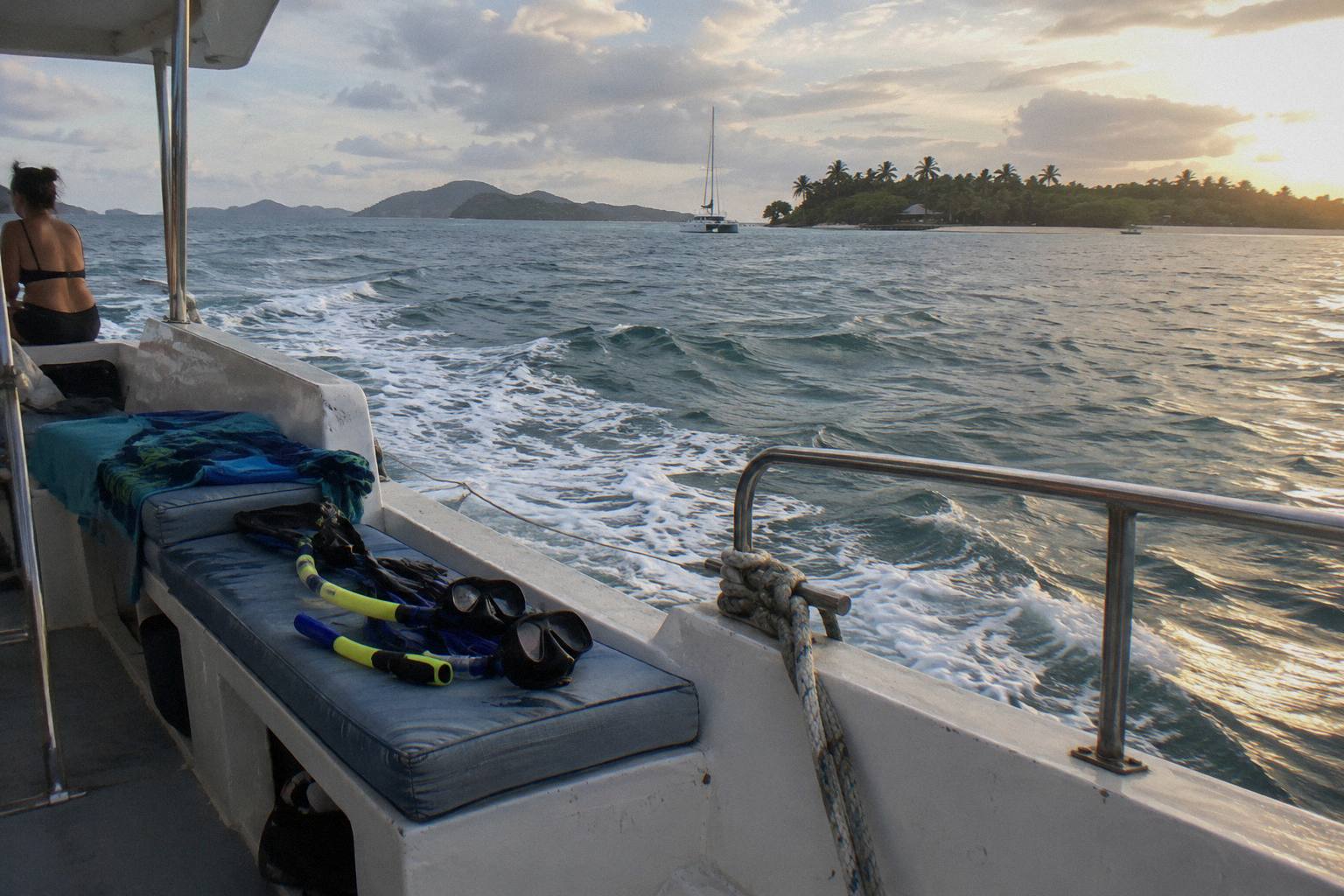
Yes, and it is the normal way to do it. The Cruisin' Fiji Monuriki, Mana Sand Bar and Snorkelling Day Cruise runs an 8-hour day from Port Denarau, lands on Monuriki for 2.5 to 3 hours with a lovo lunch cooked on the island, and is rated 4.9 across 2,736 reviews. Its from-price is $136.31 per person.
“This is a great tour. Cruisin’ Fiji organises it really well and the spots are awesome - coral sandbank in a middle of the ocean, second snorkelling spot and the famous Castaway / Survivor island. And it wasn’t crowded at all. Can highly recommend.”
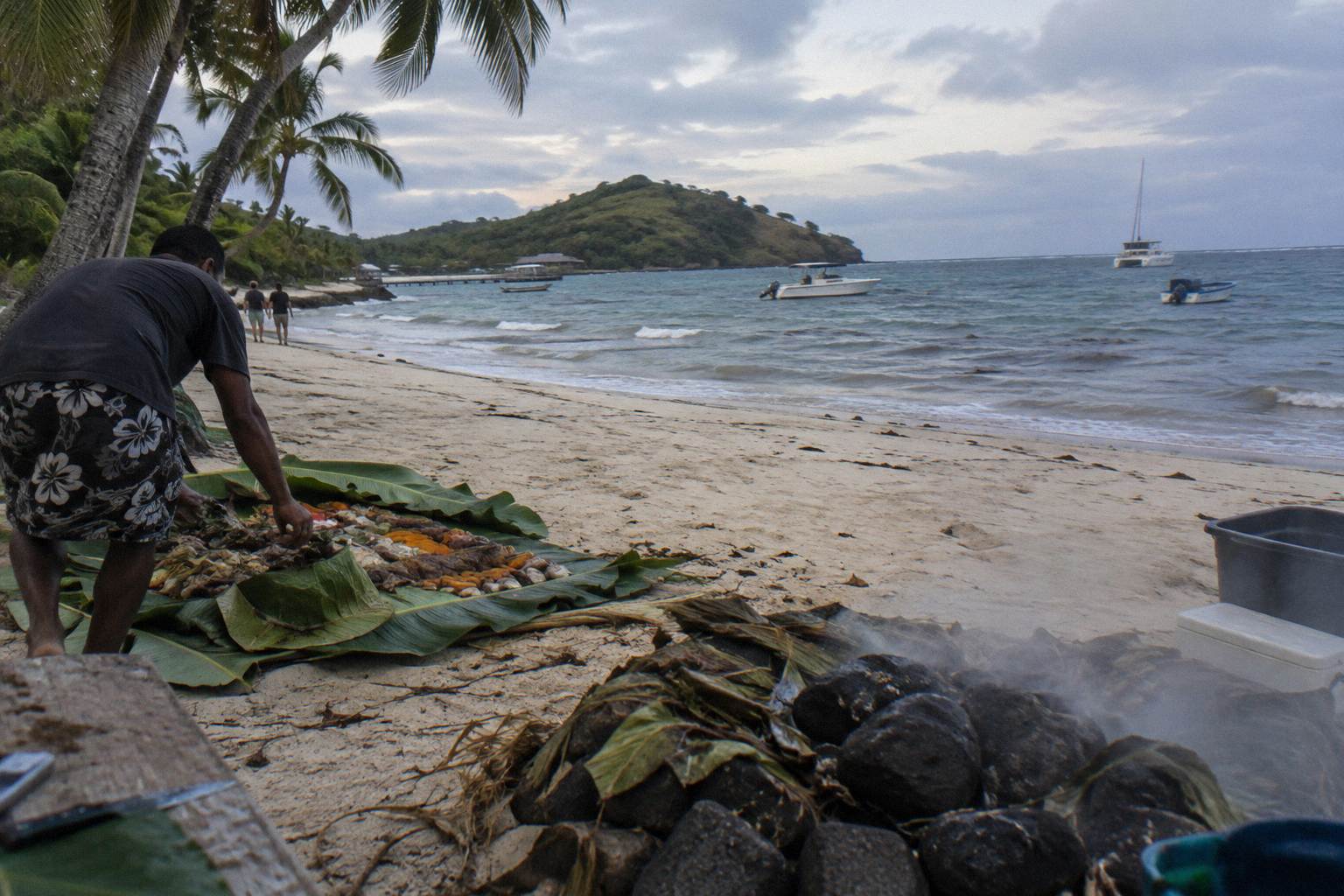
The day works in three movements, per the operator's own itinerary. Departure from Port Denarau is about 9:00 am, with the listing giving check-in from 8:00 at Booth 6. The first stop is Mana Sand Island at about 10:00 am for 45 minutes to an hour of swimming and snorkelling. The second is a deep cove snorkel beside Monu Island with morning tea on board, again for 45 minutes to an hour. The third and longest stop is Monuriki itself, the "Cast Away" and "US Survivor" film location, where the itinerary lists going onto the island for a traditional lovo lunch, an island tour, swimming, snorkelling and relaxing across 2.5 to 3 hours, leaving about 3:30 to 4:00 pm for the roughly one-hour run back, and finishing about 4:30 to 5:00 pm. The full index of guides sits on Monuriki Island Cruises.
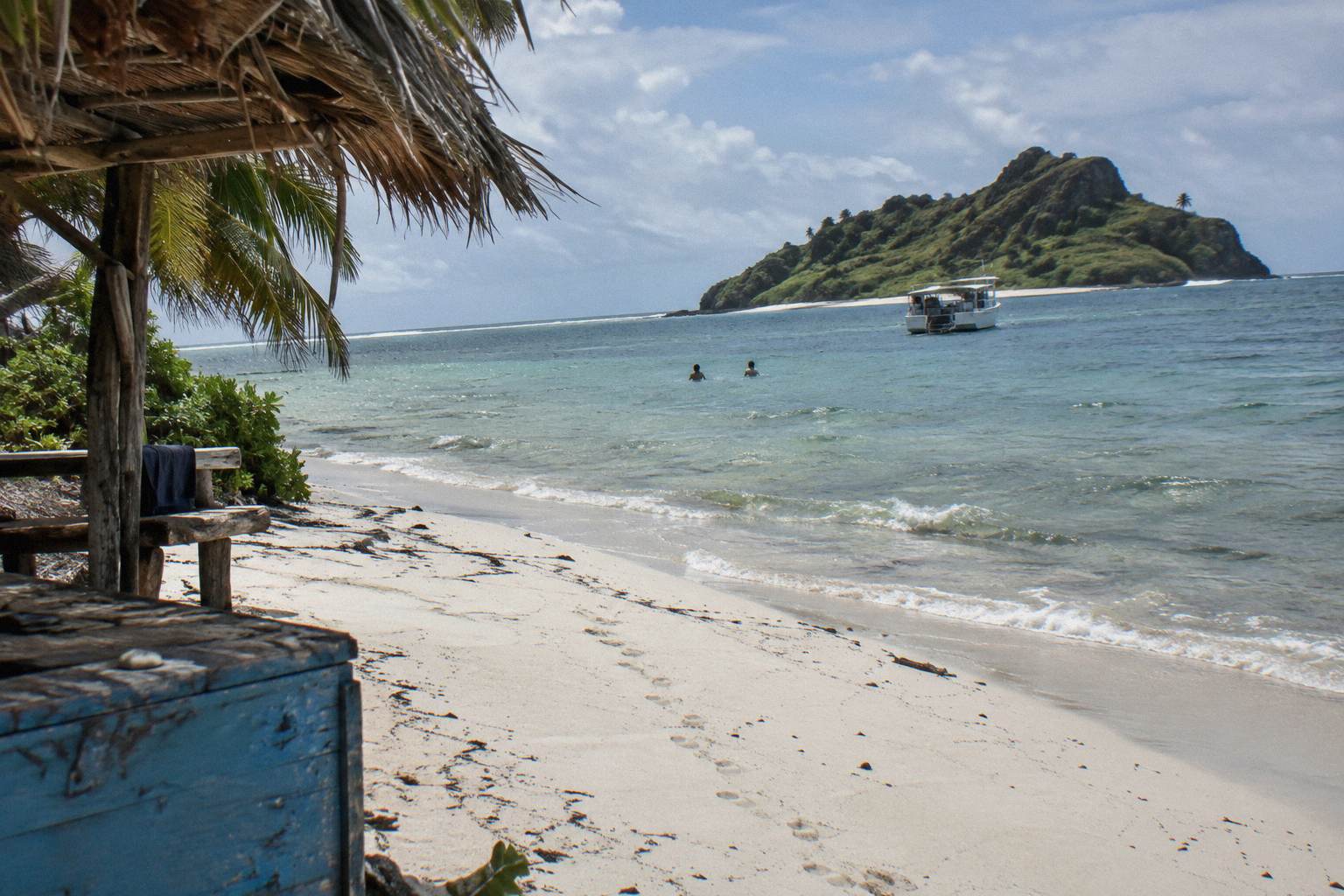
Inclusions matter on an uninhabited island, because there is nothing to buy once you are there. The listing includes the lovo lunch, fruit and snacks, beer and wine with lunch, bottled water, juice and soft drinks, and snorkelling gear, with a group maximum of 63. Children under 16 must be accompanied by an adult. The booking page lists a Denarau Marina passenger departure levy payable at check-in, and transfers from outside Denarau carry a fee. Free cancellation gives a full refund up to 24 hours before the start, and the operator's own site separately says a full refund applies if weather prevents the cruise from proceeding. None of that makes a landing guaranteed on any given day; the cruise needs good weather, and if it is cancelled for poor weather a different date or a full refund is offered.
One piece of housekeeping that catches visitors out: a Tourism Services Tax applies to qualifying tourism operators in Fiji from 1 September 2026, so check whether the price you see is the price you pay. The Fiji Revenue and Customs Service publishes the notice.
If your priority is a relaxed day on the water rather than a specific landing, the South Sea Cruises sailing day with lunch and drinks is a 7-hour Mamanuca sailing experience from $128.0 per person, rated 4.8 across 217 reviews, with soft drinks and water all day and beer and house wine from lunchtime. Its listing does not mention Monuriki, and it adds a mandatory fuel surcharge of $5 per adult and $5 per child aged 5 to 15. It suits families with children aged 5 and up; children 4 and under are not permitted.
A different flavour again is the Malamala Beach Club full day from South Sea Cruises, an 8-hour beach club day rated 4.6 across 782 reviews, departing from the Port Denarau Passenger Terminal. The booking page shows its current price. Like the sailing day, its listing does not mention Monuriki, so treat it as a beach club day rather than a film-island landing.
How Do You Tell Monuriki Apart From Its Neighbours?
Monuriki is the smallest and southernmost of a group of three islets, and its neighbours are easy to confuse with it in marketing copy. Monu Island, whose cove is the cruise's second stop, is a different place. Castaway Island, a resort island in the Mamanucas, is also a different place entirely, despite the similar-sounding name.
The confusion is understandable and the industry does not always help. The word "Castaway" appears in two unrelated products: the film Cast Away was shot on Monuriki, while the South Sea Cruises Full Day Castaway Island with Lunch spends its day on Castaway Island, a resort island in the Mamanucas that is not the film location and whose listing does not mention Monuriki. Anyone booking "the Castaway trip" in search of the film's beach needs to check which product is actually in the basket. Our companion piece on choosing between the film island and the resort island works through that exact decision.
| Day trip | Operator | Duration | Monuriki stop | Rating |
|---|---|---|---|---|
| Monuriki, Mana Sand Bar & Snorkelling Day Cruise | Cruisin' Fiji | 8 hours | Stated on the listing, with landing | 4.9 from 2,736 reviews |
| South Sea Sailing Experience with Lunch & Drinks | South Sea Cruises | 7 hours | Not stated on the listing | 4.8 from 217 reviews |
| Full Day Castaway Island with Lunch | South Sea Cruises | 9 hours | Not stated on the listing | 4.3 from 119 reviews |
| All Inclusive Island and Reef Day Sail | Captain Cook Cruises Fiji | 7 hours | Not stated on the listing | 4.5 from 821 reviews |
| Malamala Beach Club Full Day | South Sea Cruises | 8 hours | Not stated on the listing | 4.6 from 782 reviews |
Prices sit apart from that table for a reason: only three of the five tours carry a listed price, and comparing the priced three against the unpriced two would mislead. Among the three with a listed price, the sailing day starts at $128.0, the Cruisin' Fiji Monuriki day at $136.31 and the Castaway Island day at $176.42 per person, all USD from-prices as shown, with the sailing day's fuel surcharge on top. The Captain Cook day sail and the Malamala beach club day show their current prices on their booking pages.
The spelling of the island's own name deserves one plain note. Operators spell it Monuriki, and that is the spelling used on every official page read for this article. Some third-party sites use an older alternate spelling, which is a search keyword rather than a competing fact; if you see the island named differently on a booking page, it is the same uninhabited islet, and our guide to the island's name spellings covers the detail.
Common Mistakes When Choosing A Monuriki Day Cruise
The recurring mistakes are booking a Mamanuca day cruise that never states a Monuriki stop while assuming it lands on the film island, confusing the Castaway Island resort with the filming location, and overlooking the extras that sit outside the headline price: the marina levy, transfer fees from outside Denarau, and the sailing day's fuel surcharge. Checking the itinerary stops before booking fixes most of it.
The first mistake is the expensive one. Four of the five day trips in this comparison are Mamanuca days afloat that do not state a Monuriki stop, and a reader who books by headline or by price alone can end up on a very good sailing day or beach club day that simply never goes near the island they came for. The fix takes thirty seconds: read the stops. One itinerary names Mana Sand Bar, Monu Cove and Monuriki Island; the others do not name Monuriki at all.
The second is the name trap covered above, Castaway versus Cast Away, a resort island versus a wild one. The third is budgeting. The from-price is not the whole cost on any of these trips: the Cruisin' Fiji day adds the departure levy at check-in and a fee for transfers from outside Denarau, the sailing day adds its fuel surcharge, and no listing states whether taxes are included in the quoted figure. Fourth, weather: every operator here needs good weather, and the cruise runs when conditions allow, so a flexible date or a refund-aware booking matters in the wet season.
Finally, arriving unprepared for an island with no infrastructure. The operator's bring list is swimwear, towels, sunscreen and sun hats, and a camera; reef-safe sunscreen is advised by operators, and there is nothing to buy on Monuriki itself. Our packing guide for a Monuriki island cruise lists it in full. A little planning replaces the shop that deliberately is not there, which is, after all, the point of an island where nobody lives.
For a final side-by-side, here again are the three day trips that best cover the range of what a Port Denarau departure can be:
Common Questions About Monuriki Island
Does Anyone Live On Monuriki Island?
No. Monuriki is uninhabited with a recorded population of zero, no settlement and no infrastructure. Its custodians are the people of Yanuya village, the traditional landowners, who manage the island as a wildlife reserve.
Can You Visit Monuriki Island?
Yes, on a day cruise. The Cruisin' Fiji day cruise states a Monuriki stop and landing on its itinerary, with 2.5 to 3 hours on the island and a lovo lunch, running about 8 hours from Port Denarau from $136.31 per person.
Who Owns Monuriki Island?
The people of Yanuya village are the traditional landowners and custodians. Private yachts must present sevusevu at Yanuya before landing; tour operators arrange landing access for their passengers.
Why Is Nobody Allowed To Live On Or Develop Monuriki?
The landowners have traditionally established Monuriki as a reserve for its significant wildlife and the surrounding marine environment, including a genetically unique Fijian crested iguana population and major shearwater breeding colonies. Restoration work with the National Trust of Fiji and BirdLife Fiji has been under way since 2011.
Was Cast Away Really Filmed On An Uninhabited Island?
Yes. The 2000 film Cast Away starring Tom Hanks was filmed on Monuriki, per Wikipedia and confirmed by operator pages. Since the film, the island has become a tourist attraction reached by boat.
What Is The Difference Between Monuriki And Castaway Island?
Monuriki is the uninhabited film island. Castaway Island, also called Qalito, is a resort island elsewhere in the Mamanucas. The South Sea Cruises Full Day Castaway Island with Lunch goes to the resort island, not to the filming location.